
process for working with a flex PCB supplier
The process for working with a flex pcb supplier involves the following steps: The first step is to identify the right manufacturer. You need to choose a company that offers quality products at a reasonable price. Make sure that the manufacturer has experience in assembling flex circuits. You can also look at their certifications to determine whether they have the necessary skills and qualifications.
The next step is to order the parts for your flex pcb supplier. This can be done by using a BOM. A BOM is a list of all the components that you need to use in your project. The list will contain the part number, description, and quantity. It will also include the part’s vendor name. This will help you avoid any confusion when ordering the parts.
During the production of a flexible PCB, it is important to check for any defects or faults. You should pay attention to the copper surface and ensure that there is enough space between the component pads. This will prevent the formation of solder bridges, which can cause problems later on. You should also pay attention to the thickness of the copper layer and the size of the pad. It is also a good idea to choose a company that uses a thermal transfer method to avoid corrosion.
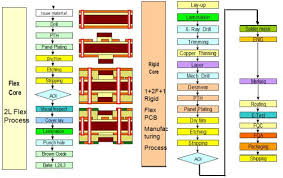
What is the process for working with a flex PCB supplier?
Once the parts are ordered, the manufacturing process begins. This includes etching the circuit board and applying copper plating. After that, the coverlay is placed over the copper circuits. The coverlay helps in reducing the risk of electrical failures, and it can be made from a variety of materials. In addition, it can also be designed to have stiffeners. These are used in selected areas on the flex PCB to provide additional mechanical stability. The stiffeners can be made from FR4 or metal (not mentioned what type of metal).
After the coverlay is applied, the flex circuit is ready for copper etching and plating. Once the copper is etched and plated, the stiffeners are added to the flex circuit. Then, the flex circuit is ready for drilling and soldering. This step is an important one because it can affect the durability of the flex circuit.
You should also consider the number of layers in your flex PCB. A multi-layer flex circuit is more durable and has more wiring density than a single-layer rigid PCB. It also allows for three-dimensional circuitry and a much smaller footprint. This makes it ideal for devices that need to be compact. However, you should keep in mind that a flexible PCB is not a substitute for a rigid PCB.
The final step is to test the flex circuit. You should do this before shipping it to a customer. This will help you verify that the flex circuit is functional and free from any defects. The test should also cover all the different environmental conditions in which the flex circuit will be exposed to.
You should also consider the packaging when working with a flex PCB supplier. The package should be moisture proof and should contain a desiccant that reduces moisture build up. It is important to use proper packaging, as otherwise the flex circuit might get damaged during transportation.