
Rapid Radios Pick Up Emergency Channels
Rapid is a next generation of instant two-way radio communication backed by a secure protocol. Designed to outperform traditional LMR two-way radios, Rapid provides true one-to-many communication performance. The TC product family embeds next-generation digital capabilities into new or existing radio designs. It’s engineered for value, exceptional quality and backed by professional integration support.
NOAA Weather Alerts (NWR) are broadcast over the weather-band frequencies and automatically turn your radio into a siren emitting sounds and flashing lights for life-threatening emergencies like tornadoes or flash floods. Some rapid radios can also receive dedicated weather alerts with Specific Area Message Encoding (SAME), which allows you to program your station for conditions that affect only a given area, usually a county.
SAME alerts will display on your screen and can be set to emit a tone or scroll on the screen in addition to sounding an alarm. You can even choose to disable the sound for these emergency alerts. The IPAWS system (Integrated Public Alert and Warning System) empowers federal, state, local and tribal public safety agencies to send WEAs over the weather-band and through other systems like sirens and digital billboards. These alerts will appear on your device as a text message or a notification with an icon and the agency responsible.
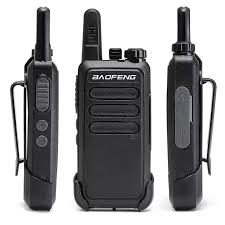
Can Rapid Radios Pick Up Emergency Channels?
Many new NOAA weather radios use Specific Area Message Encoding (SAME) technology that allows life-saving messages to be filtered to specific county areas. SAME encodes the information about an alert into a digital code which is transmitted prior to and at the end of an Emergency Alert System (EAS) broadcast.
This code can be detected as three short bursts of digital static or “duck farts” just before the EAS attention signal and at the end of the message part of the broadcast. The code can also be decoded using forked dsame software and displayed on a computer screen.
These radios come in desktop versions that can be plugged in and powered by AC power or small, portable models with battery back-up and hand crank power. Some include a display so you can see the alerts and others have flashlights and SOS sirens that can be activated from the keypad to attract attention. These radios are an essential addition to any disaster preparedness kit.
Unless you have a HAM radio license, which is required to broadcast on VHF frequencies, most local emergency response channels are encrypted or trunked, making it difficult for non-licensees to monitor them. However, during times of disasters, those rules are often nullified and communications with the local fire department or police will be possible on unencrypted channels.
The CERT Alerts service (from the US-CERT division of the Software Engineering Institute at Carnegie Mellon University, which trademarked the name CERT) distributes security advisories and vulnerability information to subscribers. These alerts can be picked up by rapid radios that support FM mode.
To enable FM mode, press and hold the MENU button until you hear the radio click on. To set the frequency step, press MENU again and use the arrows to select the desired number of frequency steps. Once the radio is in FM mode, it will automatically scan and stop at transmissions. If the radio does not detect a transmission, it will continue scanning at a lower frequency step until it hears something.
In the wake of natural disasters or terrorist threats, Local Alerts may sound on phones. These are warnings that can instruct people in specific locations to shelter or evacuate. They are pushed out by your local government or the federal government, using the Integrated Public Alert and Warning System, which also dispatches WEAs to cellphones and EAS to radio and TV.
Sign up for Local Alerts at your city, county or state government’s websites or via an online tool. Some tools compile information and alert systems from multiple cities or counties into a single tool, so be sure to independently verify that you are signing up for your county’s system.
Make sure your cellphone is compatible with WEA by checking its technology specifications and enabling it. This feature improves the timeliness and accuracy of emergency alerts to your phone, according to Apple. To enable the WEA feature on an iPhone, go to your Settings and scroll down to GOVERNMENT ALERTS.