
commonly used in printed circuit board manufacturerss
Printed circuit board (PCB) manufacturing involves a variety of materials carefully selected to meet the demands of electronic design and functionality. These materials contribute to the performance, reliability, and durability of the PCB, making them essential components in electronic devices across various industries. Several materials are commonly used in printed circuit board manufacturing, each offering unique properties and advantages.
The substrate forms the base of the printed circuit board manufacturers and provides mechanical support for the circuitry. One of the most widely used substrate materials is fiberglass-reinforced epoxy laminate, commonly known as FR-4. FR-4 is durable, flame-resistant, and offers excellent electrical insulation properties, making it suitable for a wide range of applications.
Copper foil is used to create the conductive traces and pads on the surface of the PCB. It is bonded to the substrate using an adhesive layer and then etched to create the desired circuit patterns. Copper foil is preferred for its high conductivity, corrosion resistance, and ease of fabrication. Solder mask is applied to the surface of the PCB to protect the copper traces from oxidation and contamination during soldering. It is typically made from epoxy resin or polyimide and is available in various colors, with green being the most common. Solder mask also helps to insulate the copper traces and prevent electrical shorts between adjacent traces.
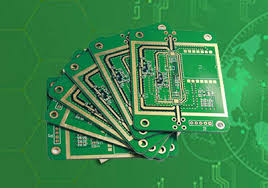
What materials are commonly used in printed circuit board manufacturerss?
Silkscreen is used to apply component labels, markings, and other identifying information to the surface of the PCB. It is typically applied using a screen printing process and is made from a durable ink or epoxy resin. Silkscreen helps assembly technicians identify components and ensure proper orientation during assembly.
Laminates are used to bond multiple layers of substrate together to create multilayer PCBs. They are typically made from fiberglass-reinforced epoxy resin or polyimide and are available in various thicknesses and dielectric constants. Laminates provide mechanical strength, insulation, and thermal stability to the PCB, making them essential for high-density and high-performance applications.
Solder paste is a mixture of solder alloy particles and flux that is used to attach surface-mount components to the PCB during assembly. It is applied to the solder pads using a stencil and then reflowed to create strong, reliable solder joints. Solder paste ensures proper electrical connections between components and the PCB.
Adhesive materials are used to bond components, substrates, and other elements together during PCB assembly. They provide mechanical strength, vibration resistance, and thermal stability to the finished PCB. Adhesives are available in various forms, including liquid adhesives, tapes, and epoxies, and are chosen based on the specific requirements of the application.
Conformal coating is applied to the surface of the PCB to protect it from environmental factors such as moisture, dust, and temperature fluctuations. It is typically made from acrylic, silicone, or epoxy resin and is available in various formulations, including spray, dip, and brush-on. Conformal coating helps to extend the lifespan of the PCB and improve its reliability in harsh operating conditions.
In conclusion, printed circuit board manufacturers utilize a variety of materials to create PCBs that meet the demands of modern electronic design and manufacturing. From substrate materials and copper foil to solder mask and conformal coating, each material plays a critical role in the performance, reliability, and durability of the finished PCB. As technology continues to advance, PCB manufacturers will continue to innovate and explore new materials and techniques to meet the evolving needs of the electronics industry.