
Pcb assembly services
Soldering plays a crucial role in Printed Circuit Board (PCB) assembly services, serving as the primary method for attaching electronic components to the PCB. The process of soldering involves the melting of solder, a metal alloy, to create a strong electrical and mechanical bond between the component leads and the copper pads on the PCB. This step is fundamental to ensuring the functionality, reliability, and durability of electronic devices.
One of the key roles of soldering in pcb assembly services is establishing electrical connections. The components on a PCB must be connected to the conductive pathways etched onto the board to create an operational circuit. Soldering provides these connections by securing the leads of components, such as resistors, capacitors, and integrated circuits, to the PCB. The quality of these solder joints is vital, as poor connections can lead to intermittent faults or complete circuit failure. A good solder joint ensures low electrical resistance, which is essential for the efficient operation of the electronic device.
Soldering also provides mechanical support to the components mounted on the PCB. In addition to ensuring electrical continuity, solder joints hold the components in place, preventing movement that could cause electrical disconnections or damage. This mechanical stability is particularly important in applications where the PCB may be subject to physical stresses, such as in automotive or industrial environments. The robustness of the solder joints directly impacts the durability and reliability of the final product.
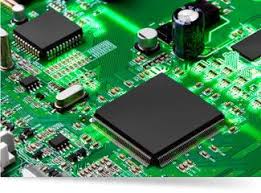
What role does soldering play in Pcb assembly services?
The soldering process in PCB assembly can be divided into several techniques, each suited to different types of components and assembly requirements. Reflow soldering is the most common method used for surface-mount technology (SMT) components. It involves applying solder paste, which consists of tiny solder particles suspended in flux, to the PCB pads. The components are then placed onto the solder paste, and the entire assembly is heated in a reflow oven. The heat melts the solder particles, forming solid joints as the assembly cools. Reflow soldering is highly efficient and can handle the placement of numerous tiny components with precision, making it ideal for mass production.
Wave soldering is another significant soldering technique, typically used for through-hole technology (THT) components. In this process, the PCB is passed over a wave of molten solder. The solder adheres to the exposed metal areas, creating reliable solder joints for the through-hole components. Wave soldering is efficient for large-scale production, but it is less common in modern PCB assembly due to the increasing prevalence of surface-mount components.
Selective soldering is a specialized technique used when both SMT and THT components are present on the same PCB, and only specific areas need soldering. This method involves the use of a small nozzle to apply solder to targeted locations, minimizing the risk of thermal damage to sensitive components and allowing for more precise control over the soldering process.
Quality control during and after soldering is critical to ensuring the integrity of the solder joints. Techniques such as automated optical inspection (AOI) and X-ray inspection are employed to detect soldering defects, including insufficient solder, bridging, and cold joints. AOI uses cameras to inspect the solder joints visually, while X-ray inspection allows for the examination of hidden solder joints beneath components. Identifying and addressing these defects early in the assembly process is crucial for maintaining the overall quality and reliability of the PCB.
In summary, soldering is a fundamental process in PCB assembly services, integral to forming the electrical connections and providing mechanical stability for components on a PCB. The various soldering techniques, including reflow, wave, and selective soldering, cater to different types of components and assembly requirements. Quality control measures ensure the reliability of solder joints, contributing to the production of high-quality electronic devices. Without effective soldering, the functionality and durability of PCBs would be compromised, highlighting the essential role it plays in the electronics manufacturing industry.