
Warehouse epoxy flooring
When it comes to warehouse epoxy flooring, one of the most important considerations is determining the right thickness for the system. The thickness of the floor not only affects its durability but also its ability to withstand heavy loads, resist damage, and provide long-term safety in a warehouse environment. Since warehouses often deal with constant traffic from forklifts, pallet jacks, and employees, a strong and resilient floor is essential. By using 100% epoxy resin as a build or wear coat, the finished coating system can be customized to provide the level of thickness needed to meet specific warehouse demands.
For light-duty warehouse applications where traffic is minimal, a thinner layer of warehouse epoxy flooring may be sufficient. In such environments, a system that is around 2 to 3 millimeters thick can provide adequate protection against general wear and tear while still offering a smooth, seamless surface. This level of thickness works well in areas that are primarily used for storage or where there is less machinery operating daily. The seamless bond created through thermal curing ensures even these thinner coatings weld tightly to the prepared surface, eliminating concerns about peeling or weak spots.
In warehouses with medium to heavy traffic, such as those that use forklifts regularly or store large amounts of goods, a thicker epoxy floor is recommended. In these cases, a system between 4 to 6 millimeters is typically ideal. This thickness provides added durability, ensuring the floor can withstand the constant movement of machinery and heavy pallets without cracking or chipping. The extra build layer also provides more resilience against surface damage, helping the warehouse maintain a safe and efficient working environment even under demanding conditions.
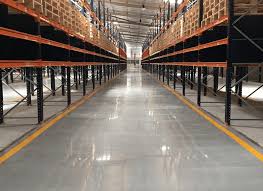
What thickness is recommended for warehouse epoxy flooring?
For extremely heavy-duty environments, such as distribution centers, manufacturing facilities, or warehouses that handle abrasive or corrosive materials, warehouse epoxy flooring may need to be even thicker. Floors with a build of 8 millimeters or more can provide maximum durability and impact resistance. This is particularly important in areas where chemical spills, heavy impacts, or high levels of foot and machine traffic are common. The combination of epoxy resin and the aliphatic urethane topcoat ensures the surface remains chemically resistant, scratch-resistant, and UV stable, even at these higher levels of thickness.
Regardless of thickness, the final urethane topcoat plays a vital role in protecting warehouse epoxy flooring. The tight application of this coating enhances the floor’s scratch resistance and creates a beautiful sheen that improves visibility within the warehouse. It also provides chemical resistance to mitigate concerns from spillage, ensuring the thickness of the epoxy system is complemented by strong surface protection. Together, the thickness of the epoxy base and the resilience of the urethane topcoat create a flooring solution built for safety, durability, and long-term performance.
In conclusion, the recommended thickness for warehouse epoxy flooring depends on the level of traffic, type of operations, and overall demands of the facility. Light-duty warehouses may only require a thinner system, while heavy-duty environments benefit from thicker applications that can withstand greater stress. With the strength of a 100% epoxy resin build coat and the added protection of an aliphatic urethane finish, warehouse epoxy flooring can be tailored to meet specific needs, providing both durability and safety for years to come.